



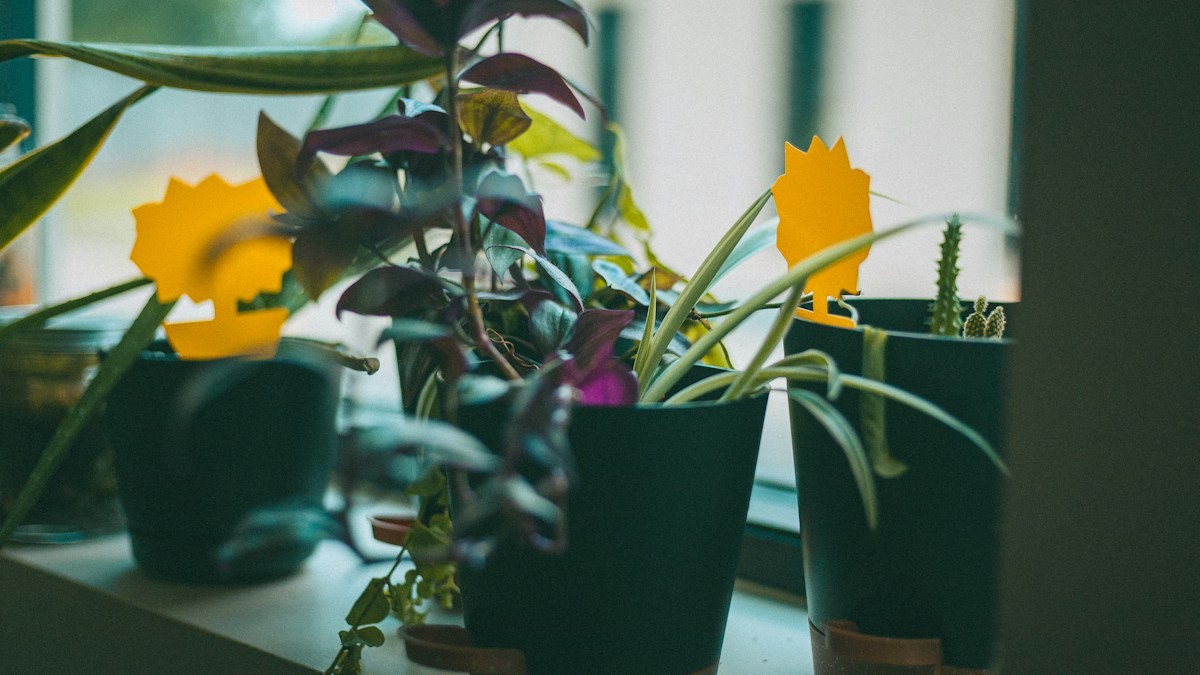
Living in an urban apartment with obstructed, north-facing windows or recessed courtyard courtyards often leads plant lovers to believe they are cursed to live in a foliage-free concrete box. Many eager indoor gardeners buy sun-loving Fiddle Leaf Figs or delicate Calatheas, only to watch them drop yellowing leaves and wither within weeks in dim apartment corners. Experiencing repeated plant mortality breeds the false belief that you lack a ‘green thumb.’
In botanical reality, ‘low light’ does not mean no light; rather, it represents the dim, dappled understory conditions of tropical rainforest floors, where specialized plant species have evolved extraordinary biochemical and anatomical adaptations to harvest scarce photons. By selecting plants genetically predisposed to survive beneath dense jungle canopies, apartment dwellers can cultivate lush indoor jungles even in north-facing living rooms.
In this comprehensive horticultural guide, we examine the science and care of the top 10 low-light indoor plants for apartments. You will discover foot-candle light metering techniques, the unique physiology of Crassulacean Acid Metabolism (CAM), watering equations that prevent root rot in low light, and curated species profiles guaranteed to thrive in dim rooms.
The Botanical Physics of Indoor Low Light
Human eyes adjust dynamically to dim light, deceiving us into overestimating how much usable energy is available for plant photosynthesis.
Measuring Foot-Candles and PAR at North Windows
While human eyes perceive an apartment room as adequately illuminated, plants require Photosynthetically Active Radiation (PAR) between 400 and 700 nanometers. Direct midday sun delivers over 10,000 foot-candles (fc), while a north-facing window typically delivers only 50 to 150 fc.
Move five feet back from that window, and light drops exponentially following the inverse square law down to a meager 15 to 30 fc. To maintain healthy foliage, indoor tropicals require a minimum light threshold of 25 to 50 foot-candles for biological maintenance, and 75 to 150 fc for active vegetative growth.
The Chlorophyll Density Adaptation
Understory shade plants feature broad, dark green leaves packed with high concentrations of Chlorophyll B. Chlorophyll B possesses an expanded absorption spectrum that captures faint, scattered wavelengths that bounce off rainforest canopies.
Variegated plants (with white or yellow patches) contain less chlorophyll and will lose their variegation or starve in low-light apartments; always choose solid deep-green cultivars like Jade Pothos or Dark Star Aglaonema.
Top 5 Indestructible Species Profiles
These botanical powerhouses possess cellular storage organs that tolerate severe neglect.
1. Snake Plant (Sansevieria trifasciata)
The undisputed champion of low-light tolerance. Snake plants utilize Crassulacean Acid Metabolism (CAM), keeping their stomata tightly closed during the day to prevent moisture evaporation, and opening them at night to absorb carbon dioxide.
Their thick, upright structural leaves store immense water reservoirs. In a low-light north-facing room, a mature snake plant requires watering only once every four to six weeks.
2. ZZ Plant (Zamioculcas zamiifolia)
Hailing from East Africa, the ZZ plant features glossy, deep green foliage arising from potato-like subterranean rhizomes. These swollen rhizomes store water for up to four months of total drought.
The ZZ plant thrives in 30 to 50 foot-candles and is virtually immune to dry apartment heating, requiring water only when the soil is bone dry all the way to the drainage holes.
3. Cast Iron Plant (Aspidistra elatior)
Cultivated in Victorian parlors during the 19th century because it could survive dim gas-lamp smoke and drafty corridors, the Cast Iron plant lives up to its name. Its tough, leathery lance-shaped leaves tolerate extreme low light and wide temperature fluctuations without complaining.
Low-Light Watering Mechanics: Avoiding the Rot Trap
Low light reduces photosynthesis and transpiration, slowing soil drying to a crawl.
The Inverse Watering Equation
In bright sun, a plant consumes water rapidly through transpiration and photosynthesis. In low light, transpiration plummets by 75%. A pot that dries in 4 days on a sunny balcony can stay soggy for 25 days in a north-facing apartment.
Never water low-light plants on a rigid calendar schedule. Always insert a wooden chopstick or your finger deep into the root ball; if any damp soil clings to the probe, delay watering.
Aerated Soil and Terracotta Breathability
Because low-light soil dries slowly, never use dense, moisture-retentive standard potting soil. Blend in 40% coarse perlite, orchid bark, and pumice to maintain open oxygen pockets around the root zone, and house plants in porous unglazed terracotta pots that breathe through their walls.
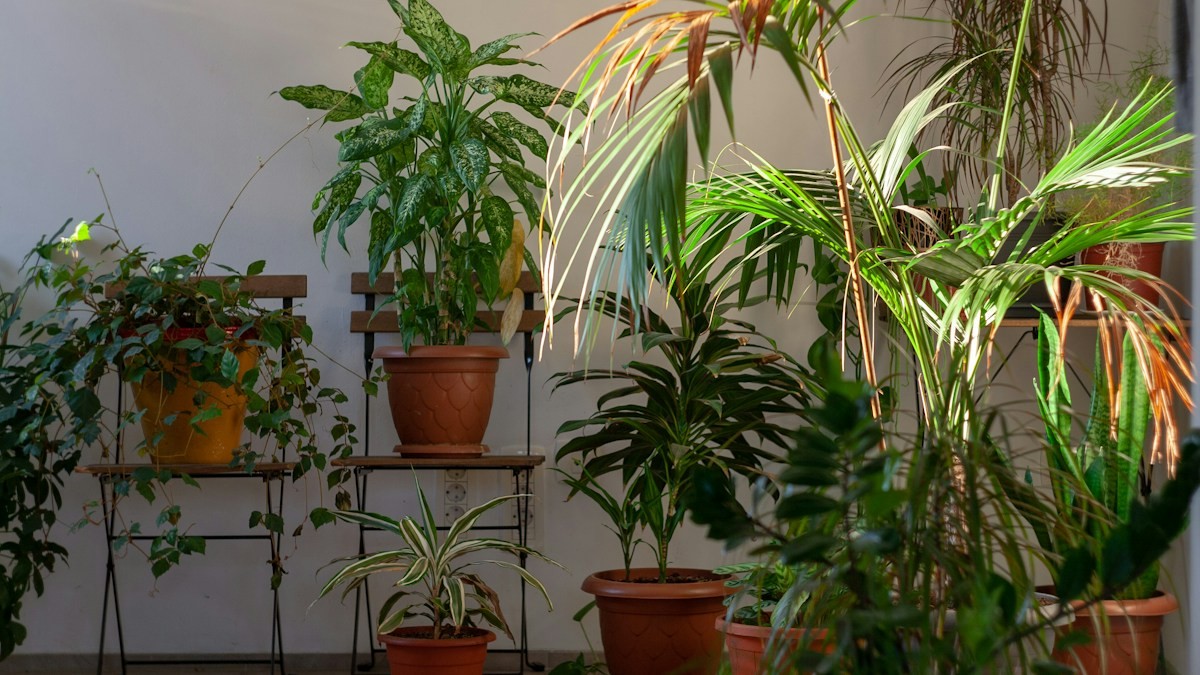
Low-Light Houseplant Light Thresholds and Resilience Profile
| Botanical Species | Common Cultivar Name | Minimum Foot-Candles | Photosynthetic Pathway | Watering Frequency Threshold |
|---|---|---|---|---|
| Sansevieria trifasciata | Snake Plant / Mother-in-Law’s Tongue | 25 – 50 Foot-Candles | Crassulacean Acid Metabolism (CAM) | Allow soil to dry 100% (Every 3-4 weeks) |
| Zamioculcas zamiifolia | ZZ Plant (Zanzibar Gem) | 30 – 60 Foot-Candles | Succulent underground tuberous rhizomes | Allow soil to dry 100% (Every 4 weeks) |
| Aglaonema commutatum | Chinese Evergreen (Silver Bay) | 40 – 75 Foot-Candles | C3 Shade understory adapted | Allow top 50% soil to dry (Every 10-14 days) |
| Epipremnum aureum | Golden Pothos (Devil’s Ivy) | 50 – 100 Foot-Candles | Rapid vine climber; resilient chloroplasts | Allow top 2 inches to dry (Every 7-10 days) |
| Aspidistra elatior | Cast Iron Plant | 25 – 50 Foot-Candles | Extremely dense fibrous root system | Allow top 50% soil to dry (Every 14 days) |
Recommended Further Reading & Authoritative References
To deepen your understanding of these systems, review our companion analysis on Houseplant Care 101 and Aroid Soil Mix Guide. For official technical specifications and industry standards, consult the Royal Horticultural Society Houseplants & Indoor Cultivation Standards.
Seasonal Acclimation & Preventive Plant Healthcare
Ensuring lasting vitality when cultivating Low-Light Indoor Plants Apartments requires understanding seasonal metabolic shifts and adjusting ambient care routines accordingly. Indoor houseplants modulate their transpiration rates and nutrient uptake in direct response to changing daylight hours and indoor HVAC cycles.
During transitional seasons, carefully calibrate your watering frequency and inspect soil root zones for adequate drainage. Wipe foliage regularly with a damp microfiber cloth to remove domestic dust layers that obstruct photosynthetic stomata and reduce light absorption efficiency.
Establish a bi-weekly preventive inspection habit, examining the undersides of leaves and leaf axils for early signs of opportunistic pests like spider mites or scale. By identifying subtle foliage cues early and providing consistent, gentle care, your indoor greenery will maintain lush, robust growth year-round.
Frequently Asked Questions
Can low-light plants survive in a windowless bathroom?
No plant can survive in pitch darkness indefinitely. In windowless rooms, you must provide artificial illumination by leaving an LED ceiling bulb on for 10 hours daily, or rotate two plants between the windowless room and a naturally lit room every 2 weeks.
How do I know if my plant is receiving too little light?
Signs of extreme light starvation include: elongated, stretched-out stems with wide gaps between leaves (etiolation), new leaves growing significantly smaller than older leaves, loss of variegation, and soil remaining wet for more than 3 weeks.
Should I fertilize my low-light plants in winter?
No! In low-light apartment settings, plants have very slow metabolic growth rates. Applying chemical fertilizer when plants are semi-dormant causes toxic fertilizer salt accumulation that burns sensitive root tips. Fertilize only at quarter-strength during active summer growth.
What foot-candle reading indicates healthy low light for houseplants?
A reading between 50 and 100 foot-candles (measured using a smartphone light-meter app placed directly at leaf height facing the light source) is the sweet spot for sustainable, healthy understory tropical foliage.