



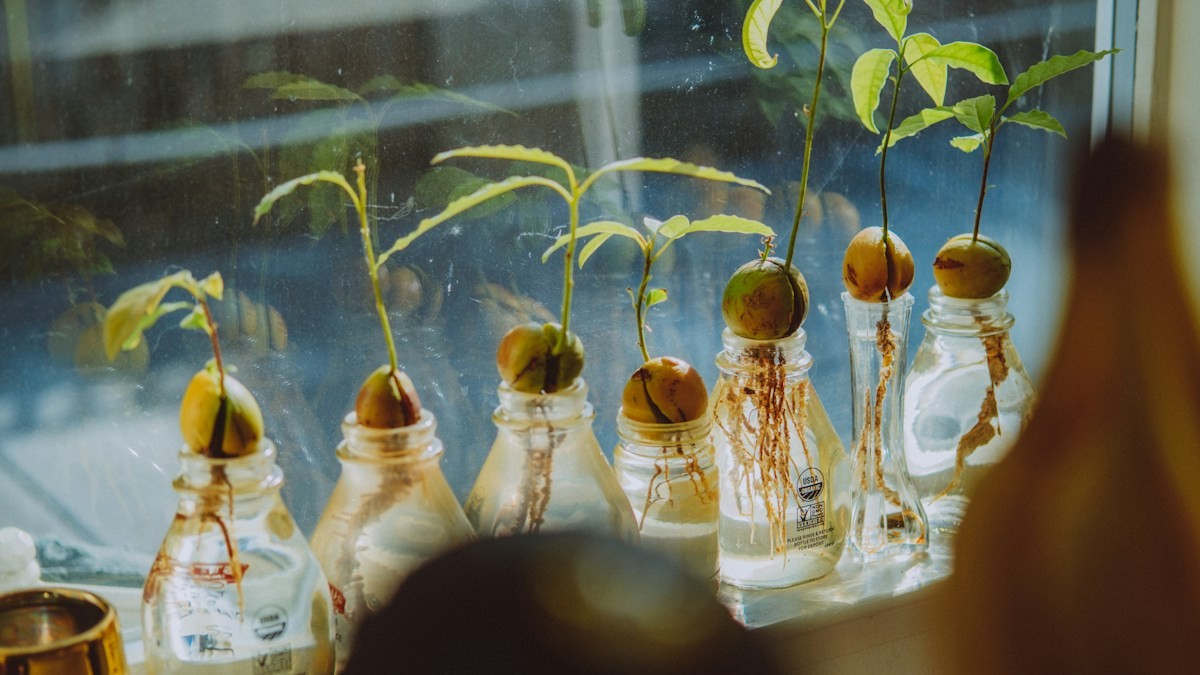
For urban apartment dwellers and indoor plant collectors living in high-rise buildings with north-facing exposures, interior light is often the single most unforgiving biological constraint. A houseplant parent can blend the most luxurious chunky aroid soil, maintain 70% relative humidity, and water with pure steam-distilled water, but if photosynthetic light energy is insufficient, the plant’s metabolic engine grinds to a halt. In low light, internodes stretch into leggy, pale vines, mature leaf fenestrations fail to develop, and damp soil sits stagnant for weeks without evaporating, creating ideal conditions for root rot.
In an effort to rescue light-starved tropicals, indoor gardeners frequently purchase artificial lighting. Unfortunately, commercial lighting marketing is saturated with confusing metrics and misleading gimmicks—from cheap, garish purple ‘blurple’ LED wands to high-wattage desk lamps evaluated solely by human ‘Lumens’ or ‘Lux.’ Plants do not perceive light through human eyes; illuminating a plant with a bright green or yellow light provides abundant human illumination while starving the plant’s chlorophyll photosynthetic reaction centers.
Transforming your indoor greenery requires an evidence-based understanding of plant photobiology. This comprehensive horticultural engineering manual explores led grow light ppfd dli houseplants science. We demystify the Photosynthetically Active Radiation (PAR) spectrum, explain the mathematics of Daily Light Integral (DLI), evaluate the inverse square law of fixture distance, and deliver a practical blueprint for building museum-grade illuminated plant shelves.
Human Lux vs Plant PAR: The Physics of Photobiology
Why human brightness metrics are functionally blind to plant photosynthesis.
The Flaw of Lumens, Foot-Candles, and Lux Meters
Standard light meters and smartphone lux apps measure ‘photopic vision’—the spectral sensitivity of the human eye. Human retinal cones exhibit peak sensitivity to yellow-green wavelengths centered at 555 nanometers (nm).
Plants, by contrast, evolved to absorb solar energy using specialized photosynthetic pigments: predominantly Chlorophyll A (absorbing at 430nm blue and 662nm red) and Chlorophyll B (absorbing at 453nm blue and 642nm red). Green light (500-550nm) is largely reflected by leaves (which is why foliage appears green to our eyes). A 555nm light can register a blistering 5,000 Lux on your meter while providing virtually zero usable energy to your plant’s chloroplasts.
Photosynthetically Active Radiation (PAR) and PPFD
Horticultural scientists evaluate plant lighting exclusively across the Photosynthetically Active Radiation (PAR) waveband, spanning wavelengths from 400 to 700 nanometers. Light intensity within this waveband is measured as Photosynthetic Photon Flux Density (PPFD), expressed in micromoles of photons striking a square meter per second ($μ mol/m^2/s$).
PPFD measures the exact number of active photons raining down on leaf surfaces each second to excite electrons in Photosystem I and II. Low-light plants (Snake Plants, ZZ Plants) survive at 30 to 50 PPFD; medium-light tropicals (Pothos, Philodendrons) thrive at 100 to 150 PPFD; while high-light aroids (*Monstera deliciosa*, *Anthurium*, *Ficus lyrata*) require 200 to 300+ PPFD to produce massive foliage.
Daily Light Integral (DLI): The Photoperiod Equation
How to trade light intensity for duration using automated timers.
The Cumulative Daily Dose of Photons
While PPFD measures instant photon intensity per second, Daily Light Integral (DLI) measures the cumulative total volume of light photons delivered to a plant over an entire 24-hour day, expressed in moles of photons per square meter per day ($mol/m^2/day$). DLI functions exactly like cumulative daily rainfall.
The mathematical formula is: $DLI = PPFD × Photoperiod (hours) × 0.0036$. This mathematical relationship empowers the indoor gardener: if you have a modest grow light delivering only 100 PPFD, you can achieve the exact same cumulative biological growth by running the light for 14 hours as a 200 PPFD commercial fixture running for 7 hours.
Automating the 12-to-14-Hour Photoperiod
Tropical rainforest understory plants evolved along the equator, where day length remains a stable 12 hours year-round. Never leave grow lights running 24 hours continuously! Plants require a dark period to carry out cellular respiration, synthesize starch reserves, and balance circadian hormones.
Connect your grow lights to a digital plug-in timer or smart home automation outlet, programming a consistent schedule of 12 to 14 hours of continuous light followed by 10 to 12 hours of total darkness every day.
Spectrum Selection and The Inverse Square Distance Law
Why full-spectrum 4000K white LEDs outclass ugly purple blurple fixtures.
The Death of ‘Blurple’ and The Rise of High-CRI White LEDs
A decade ago, early LED grow lights utilized narrow-band red and blue diodes, casting a garish neon purple (‘blurple’) glow that rendered residential living rooms uninhabitable and made diagnosing pest infestations impossible. Modern horticultural science proves that full-spectrum white LEDs (utilizing broad-spectrum phosphor conversion) yield equal or superior plant growth.
Select full-spectrum LED fixtures rated at 4000K to 5000K with a high Color Rendering Index (CRI > 90). These lights appear as clean, warm-neutral sunshine to human eyes—illuminating your living space beautifully while delivering high concentrations of 450nm royal blue (for tight internodal stem growth) and 660nm deep red (for vigorous root and leaf biomass).
The Inverse Square Law of Light Falloff
The physics of light propagation is governed by the Inverse Square Law: light intensity is inversely proportional to the square of the distance from the source ($I ∝ 1/d^2$). If you double the distance between your grow light and your plant (e.g., moving from 12 inches to 24 inches), the light intensity does NOT drop by half—it plunges by 75%, delivering only one-fourth of the photons!
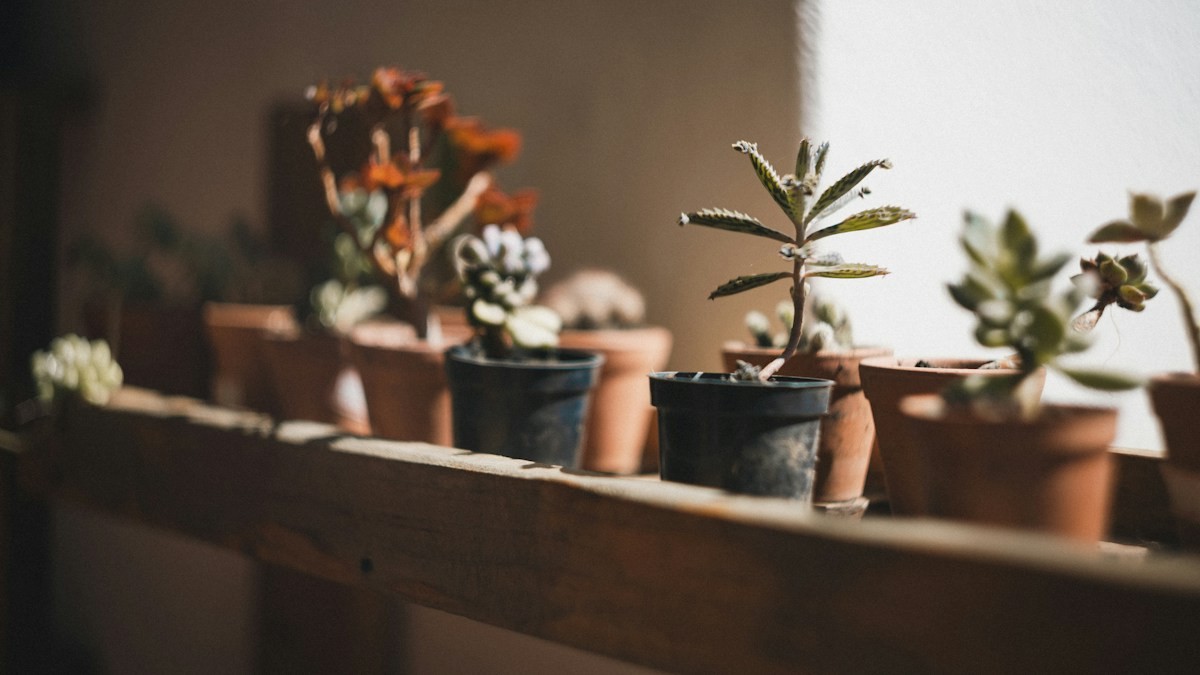
Position your LED grow bulbs between 12 and 18 inches above the top foliage of tropical houseplants to maximize photon density without causing thermal leaf scorch.
Houseplant Light Requirements: PPFD & Daily Light Integral (DLI)
| Houseplant Group | Target PPFD (μmol/m²/s) | Daily Photoperiod | Target DLI (mol/m²/day) | Example Plant Species |
|---|---|---|---|---|
| Low-Light Tolerant | 30 – 60 PPFD | 10 – 12 Hours | 1.5 – 2.5 DLI | ZZ Plant, Cast Iron, Snake Plant |
| Medium-Light Tropicals | 80 – 150 PPFD | 12 – 14 Hours | 4.0 – 7.5 DLI | Pothos, Philodendron, Calathea |
| High-Light Aroids | 150 – 250 PPFD | 12 – 14 Hours | 7.0 – 12.0 DLI | Monstera deliciosa, Anthurium |
| Direct Sun Succulents / Ficus | 300 – 500+ PPFD | 14 – 16 Hours | 15.0 – 25.0+ DLI | Fiddle Leaf Fig, Cacti, Citrus |
Recommended Further Reading & Authoritative References
To deepen your practical mastery of these concepts, explore our comprehensive analyses on building an indoor plant shelf with integrated full-spectrum LED grow lights and top 10 low-light indoor plants for apartments with north-facing windows. For official technical standards, peer-reviewed benchmarks, and industry guidelines, consult the Utah State University Crop Physiology Laboratory: Understanding Daily Light Integral (DLI).
Frequently Asked Questions
Can I use standard household LED light bulbs as grow lights?
Yes! A standard 15W to 20W household LED floodlight bulb (like the GE Refresh 5000K daylight bulb or Philips Ultra-Bright) provides excellent full-spectrum PAR light when positioned 12 to 15 inches above houseplants at a fraction of the cost of specialty grow lights.
Can grow lights burn plant leaves?
LED grow lights produce very little radiant infrared heat, so heat burning is rare. However, if a high-intensity commercial grow light (500+ PPFD) is placed too close to a shade-loving Calathea, ‘photo-bleaching’ will occur—turning leaves silvery-white as excess photons overwhelm and bleach the chlorophyll.
How many hours a day should I run my grow lights in winter?
Run your grow lights for 12 to 14 hours every day in winter. Because natural winter days are short and dim, automated grow lights compensate for the seasonal solar deficit, keeping tropical plants growing actively through December and January.
What is the best wattage for a tabletop plant grow bulb?
A true power draw of 20 to 36 Watts (such as the Sansi 24W or 36W LED grow bulb) provides the ideal photon density for a cluster of 3 to 5 medium-sized tropical plants on a desk or shelf.