




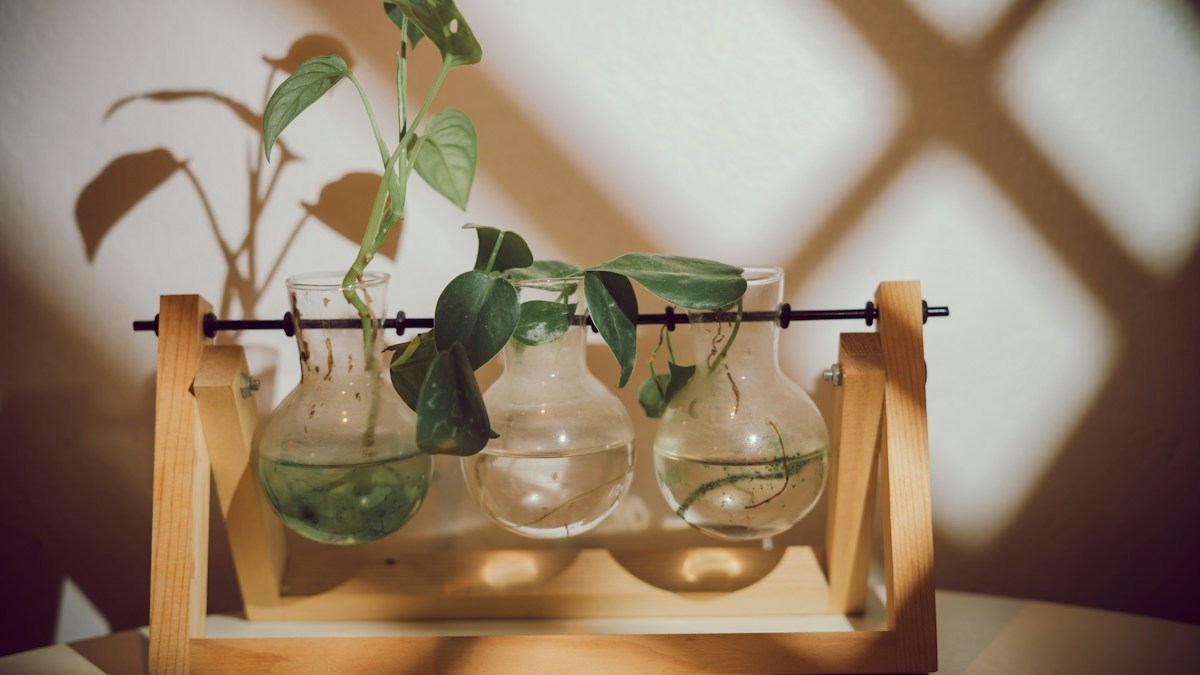
There is an undeniable, addictive magic to water propagation. Taking a healthy green vine cutting from a beloved Monstera or Pothos, placing the stem in a clear glass vessel of fresh water, and watching fragile white roots emerge and branch right before your eyes is one of the most deeply satisfying rituals in indoor horticulture. Water propagation allows you to clone your favorite plants for free, create lush tabletop centerpieces, and share botanical gifts with friends.
Yet, for many enthusiastic plant parents, propagation often ends in heartbreak. Cuttings turn into brown, slimy mush inside the jar, or cuttings develop gorgeous, long roots in water only to collapse and die the moment they are potted into soil. These failures occur because water propagation is not simply dropping plant stems into a cup of tap water; it is governed by cellular plant anatomy, hormonal auxin signaling, and hydraulic root transitions.
In this comprehensive masterclass, we teach you the exact science and step-by-step methodology of water propagation. You will master stem node anatomy, clean surgical cuts, dissolved oxygen management in jars, and the delicate protocol for transitioning fragile aquatic roots into chunky aroid soil without transplant shock.
Anatomy of a Cutting: Why Leaves Without Nodes Never Root
You can leave a severed leaf stem in water for six months, but without meristematic node cells, it will never grow a new plant.
The Meristematic Node Explained
The node is the swollen band on a plant stem where leaves, petiole bases, and aerial roots emerge. Inside the node lies the apical meristem—the plant’s undifferentiated stem cells. When signaled by endogenous plant hormones (primarily auxins), these meristematic cells differentiate into adventitious root tissue.
If you cut only a leaf blade and petiole (the leaf stem) without including a piece of the main stem node, you produce a ‘zombie leaf.’ The petiole may develop tiny survival roots, but it will never have the genetic machinery to produce a new vine, stem, or second leaf.
Surgical Sterilization and Cut Geometry
Always use razor-sharp bypass pruning shears or a surgical scalpel wiped down with 70% isopropyl alcohol. Crushing a stem with blunt kitchen scissors damages cellular vascular bundles, inviting bacterial pathogens.
Make a clean cut roughly 1/2 inch below the node at a 45-degree angle. The angled cut increases the surface area exposed to dissolved oxygen in the water.
The Vessel Environment: Dissolved Oxygen and Water Physics
Water roots require oxygen to breathe; stagnant, deoxygenated water breeds anaerobic rot.
The 5-Day Water Refresh Rule
Fresh tap water contains dissolved atmospheric oxygen that fuels cellular respiration in developing root hairs. Within 5 to 7 days, developing roots and microbial activity deplete this dissolved oxygen, turning the jar into an anaerobic death zone.
Dump and replenish propagation jars with fresh, room-temperature filtered water every 5 to 7 days. Rinse the cutting’s stem under running water to wash away bacterial biofilms.
Clear Glass vs. Amber Vessels and Algae Prevention
Clear glass bottles allow you to monitor root growth and detect early signs of rot. However, direct sunlight hitting clear glass generates green algal blooms that rob water of nutrients.
Place clear propagation jars in bright, indirect sunlight—never harsh direct afternoon sun. Alternatively, use amber or frosted glass jars that screen out UV wavelengths and keep roots in beneficial semi-darkness.
The Transition Bridge: From Water Roots to Soil
Water roots and soil roots are anatomically distinct; bridging the transition requires careful moisture buffering.
Understanding Aquatic vs. Terrestrial Root Morphology
Roots grown in water develop a specialized cellular architecture characterized by thin cell walls, abundant aerenchyma tissue (air channels), and a complete absence of protective root hair cuticles. They are fragile and unequipped to push through dense, abrasive soil.
Never wait until water roots become an overgrown 12-inch bird’s nest inside the jar. The optimal time to pot a cutting into soil is when secondary lateral root hairs begin branching off the primary root (typically 2 to 3 inches in length).
The 10-Day Moisture Weaning Protocol
Plant your rooted cutting into a small 4-inch pot filled with a chunky, airy aroid mix. For the first 7 to 10 days, keep the soil consistently moist (mimicking the water vessel) so the aquatic roots don’t dehydrate and shrivel.
Gradually taper off watering over the following two weeks, allowing the plant to develop robust, thick terrestrial root hairs that anchor securely into the substrate.
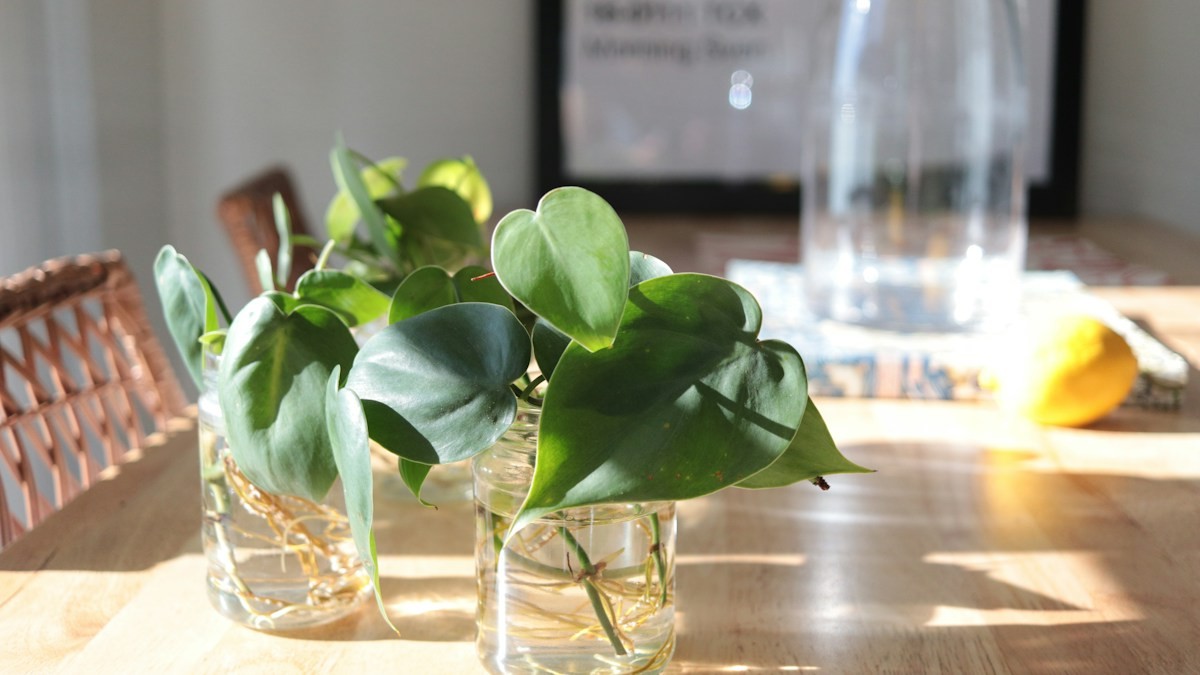
Water Propagation Timeline & Node Requirements by Species
| Houseplant Species | Anatomy Required for Cutting | Time to First Root (Days) | Optimal Water Temp | Soil Transition Threshold |
|---|---|---|---|---|
| Golden Pothos (Epipremnum) | 1 Node + 1 Leaf (Single-node vine) | 5 – 7 Days | 70°F – 78°F (21°C – 25°C) | Roots reach 2.0 inches (5 cm) |
| Monstera Deliciosa | Stem Node + Aerial Root nub + 1 Leaf | 14 – 21 Days | 72°F – 80°F (22°C – 26°C) | Roots reach 3.0 inches with lateral branches |
| Heartleaf Philodendron | Vine node segment + 1-2 Leaves | 7 – 10 Days | 70°F – 76°F (21°C – 24°C) | Roots reach 2.0 inches |
| Monstera Adansonii (Swiss) | Vine internode + Leaf node | 10 – 14 Days | 72°F – 78°F (22°C – 25°C) | Roots reach 2.5 inches with secondary root hairs |
| Syngonium (Arrowhead) | Basal node with root bump | 7 – 12 Days | 70°F – 76°F (21°C – 24°C) | Roots reach 2.0 inches |
Recommended Further Reading & Authoritative References
To deepen your understanding of these systems, review our companion analysis on Aroid Soil Mix Guide and Repotting Rootbound Tropicals. For official technical specifications and industry standards, consult the University of Minnesota Extension Plant Propagation & Stem Cutting Science.
Seasonal Acclimation & Preventive Plant Healthcare
Ensuring lasting vitality when cultivating Water Propagation Guide requires understanding seasonal metabolic shifts and adjusting ambient care routines accordingly. Indoor houseplants modulate their transpiration rates and nutrient uptake in direct response to changing daylight hours and indoor HVAC cycles.
During transitional seasons, carefully calibrate your watering frequency and inspect soil root zones for adequate drainage. Wipe foliage regularly with a damp microfiber cloth to remove domestic dust layers that obstruct photosynthetic stomata and reduce light absorption efficiency.
Establish a bi-weekly preventive inspection habit, examining the undersides of leaves and leaf axils for early signs of opportunistic pests like spider mites or scale. By identifying subtle foliage cues early and providing consistent, gentle care, your indoor greenery will maintain lush, robust growth year-round.
Frequently Asked Questions
Can I keep Monsteras and Pothos growing in water permanently?
Yes! Houseplants can live in water for years (hydroculture). However, water contains zero organic minerals. You must add 2 to 3 drops of specialized liquid hydroponic fertilizer to the water every month to prevent nutrient chlorosis and stunted leaves.
What should I do if the cut stem turns black and mushy in water?
Remove the cutting immediately. Using a sterile razor blade, cut away all black, mushy tissue until you see clean, white, healthy plant vascular tissue. Let the cutting sit out on a paper towel for 2 hours to form a protective callous before placing it in fresh water.
Does rooting powder work for water propagation?
Rooting hormone powders are formulated with talc and are designed strictly for soil or rockwool cloning. In water jars, the powder simply washes off and clouds the water into a muddy mess. Skip rooting hormone in water propagation.
How long does it take for a Monstera cutting to produce its first new leaf in soil?
After potting a water-rooted cutting into soil, the plant redirects all metabolic energy into establishing terrestrial root architecture. It is completely normal for a cutting to produce zero new leaves for 4 to 8 weeks before launching its first explosive new leaf spike.