




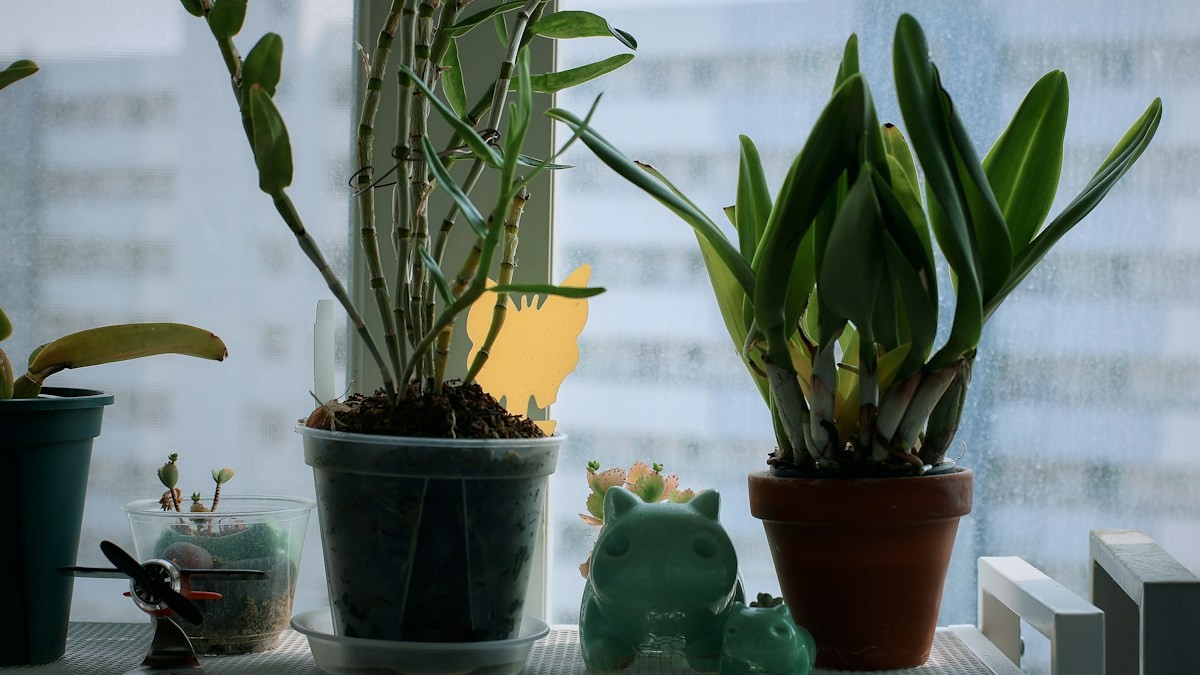
Few household experiences are as infuriating to plant lovers as sitting down with a morning cup of coffee or working on a laptop only to have tiny, erratic black flies flutter aggressively around your nose, screen, and coffee mug. These ubiquitous indoor nuisances are fungus gnats (*Bradysia* species), and while adult flies do not bite humans, their presence inside a home or office is an exasperating sign of an out-of-control biological infestation thriving beneath the surface of your houseplant pots.
Frustrated plant owners routinely resort to desperate home remedies found on social media: pouring hydrogen peroxide, neem oil, dish soap, cinnamon, or chamomile tea directly into their pots. Unfortunately, these makeshift tactics either fail completely or inflict severe chemical burns on tender root hairs. In the meantime, hundreds of transparent, ravenous gnat larvae crawl through the damp potting soil, devouring delicate capillary feeder roots and spreading fungal root pathogens like *Pythium* and *Fusarium*.
Eradicating fungus gnats permanently does not require toxic chemical sprays or ruined roots; it requires targeted biological warfare. This definitive pest management guide decodes fungus gnat biological eradication bti protocols. We examine the exact 17-day reproductive timeline of *Bradysia*, explore the crystalline biochemistry of *Bacillus thuringiensis israelensis*, deploy chromatically calibrated yellow sticky traps, and deliver an integrated three-week eradication strategy that wipes out gnats forever.
The 17-Day Lifecycle of the Fungus Gnat (*Bradysia* Species)
Why treating only flying adults guarantees an endless cycle of re-infestation.
The Subterranean Larval Menace
Understanding why fungus gnats are so persistent requires examining their four-stage metamorphic lifecycle: egg, larva, pupa, and adult. A single adult female gnat lives for only 7 to 10 days, but during that brief lifespan, she deposits up to 300 microscopic eggs in the damp top layer of organic potting soil.
Within four days, the eggs hatch into translucent, black-headed worm-like larvae. For the next two weeks, these larvae feed voraciously on fungal mycelium and tender plant root hairs. In young seedlings, cuttings, and thin-rooted tropicals (like Calatheas and Ferns), heavy larval feeding stunts growth, causes sudden leaf yellowing, and opens physical lesions where fungal rot takes hold.
The Futility of Surface Sprays Alone
At any given moment during an active infestation, adult flying gnats represent less than 15% of the total insect population in your home; the remaining 85% exist underground as eggs, larvae, and pupae. Spraying flying adults with aerosol insecticides or wiping foliage leaves the massive subterranean breeding reservoir untouched.
Within 48 hours of spraying adult flies, hundreds of new larvae complete their pupation cycle and emerge from the soil as a fresh generation of fertile winged adults, restarting the infestation cycle from scratch.
The Biochemistry of *Bacillus Thuringiensis Israelensis* (BTI)
How nature’s most targeted microbial pesticide destroys larvae from within.
The Cry and Cyt Endotoxin Mechanism
*Bacillus thuringiensis israelensis* (BTI) is a naturally occurring, soil-dwelling bacterium that produces specialized protein crystals known as Cry and Cyt delta-endotoxins during its spore-forming reproductive phase.
When fungus gnat larvae ingest BTI-inoculated potting soil, these protoxin crystals dissolve in the intensely alkaline environment (pH > 9.0) of the insect’s midgut. Activated enzymes cleave the proteins into toxic molecules that bind specifically to midgut epithelial cell receptors, punching microscopic pores through the gut wall. Within 24 to 48 hours, the larvae cease feeding and die of septic shock.
100% Safety for Plants, Humans, and Pets
Unlike broad-spectrum organophosphate or synthetic pyrethroid insecticides that poison central nervous systems, BTI is hyper-selective. Mammals, birds, honeybees, earthworms, and plants lack the alkaline midgut chemistry and specific gut receptors required to activate BTI endotoxins.
BTI passes through non-target organisms completely inert and harmless. It leaves zero toxic residues on household surfaces, does not harm beneficial soil mycorrhizae, and has earned an exemplary safety classification from environmental and agricultural agencies worldwide.
The 3-Week Integrated Eradication Protocol
Step-by-step master plan to break the reproductive chain permanently.
Week 1: The BTI ‘Tea’ Drench and Sticky Card Trap Deployment
Acquire BTI granules or solid rings (commonly marketed as ‘Mosquito Bits’ or ‘Mosquito Dunks’). Steep 1 tablespoon of granules per gallon of warm (non-chlorinated) water for 30 minutes, stirring occasionally to extract the living bacterial spores and crystalline endotoxins into suspension.
Strain out the corn cob granules (never let granules sit on top of potting soil where they will mold) and water every houseplant in your collection thoroughly with this BTI tea. Concurrently, place bright yellow sticky cards on small stakes at soil level in every pot; yellow phototaxis attracts and traps adult females before they can lay another clutch of eggs.
Weeks 2 and 3: Breaking the Pupal Lag
BTI kills active feeding larvae, but it cannot penetrate the protective shell of gnat pupae or unhatched eggs. Therefore, a single watering application is never sufficient. You must water exclusively with freshly brewed BTI tea for three consecutive watering cycles (approximately 18 to 21 days).
As pupae hatch into adults, they are immediately captured by the yellow sticky cards; as eggs hatch into larvae, they ingest the BTI residual in the soil and perish before reaching sexual maturity. By day 21, the entire overlapping population across all life stages is completely eradicated.
Fungus Gnat Treatment Comparison: Efficacy, Safety, and Larval Kill
| Remedy / Strategy | Target Life Stage | Larval Mortality Rate | Risk of Plant Root Damage | Long-Term Control Rating |
|---|---|---|---|---|
| BTI Bacterial Drench (Mosquito Bits) | Larvae (Subterranean) | 98% – 100% (High precision) | Zero risk (100% biological safety) | Permanent & Definitive |
| Beneficial Nematodes (S. feltiae) | Larvae & Pupae | 95% – 99% (Active hunters) | Zero risk (Completely organic) | Excellent (Active while soil damp) |
| Yellow Sticky Card Traps | Flying Adults | 0% Larval kill (Adults only) | Zero risk (External cards) | Essential diagnostic & partner |
| Hydrogen Peroxide (3% Drench) | Larvae & Root tissue | 40% – 60% (Kills on contact) | Moderate (Can burn fine root hairs) | Poor (Degrades to water instantly) |
| Neem Oil Soil Soak | Larvae (Suffocation) | 50% – 70% (Inconsistent) | High (Can coat roots & cause rot) | Moderate (Unpleasant odor indoors) |
| Diatomaceous Earth Surface | Adults emerging | 30% – 50% (Mechanical) | Low (Useless when soil is damp) | Poor in humid plant rooms |
Recommended Further Reading & Authoritative References
To deepen your practical mastery of these concepts, explore our comprehensive analyses on preventing gnat infestations with dry topsoil bottom watering and aerating potting media with chunky soil ingredients. For official technical standards, peer-reviewed benchmarks, and industry guidelines, consult the Colorado State University Extension: Fungus Gnats Management.
Frequently Asked Questions
Can I leave Mosquito Bits corn granules on top of my plant soil?
No! The corn carrier granules will rapidly mold into unsightly white fungus in humid indoor rooms. Always brew the bits in water for 30 minutes, strain the granules out, and apply only the liquid BTI tea to your soil.
Will allowing soil to dry out completely kill fungus gnat eggs?
Drying the top 2 inches slows larval movement, but microscopic eggs and pupae can survive in dry soil for over a week and re-emerge the moment you water again. Soil drying alone rarely eradicates an established population.
Do fungus gnats bite people or pets?
No. Fungus gnats lack mouthparts capable of piercing skin. They are entirely harmless to humans and domestic animals, but their presence indicates excessive soil moisture and subterranean root degradation.
Why do yellow sticky traps catch so many gnats compared to blue traps?
Fungus gnats exhibit strong positive phototaxis specifically toward the yellow spectrum (550-590 nm), which mimics tender green-yellow new plant foliage. Blue traps are designed for western flower thrips, not gnats.